
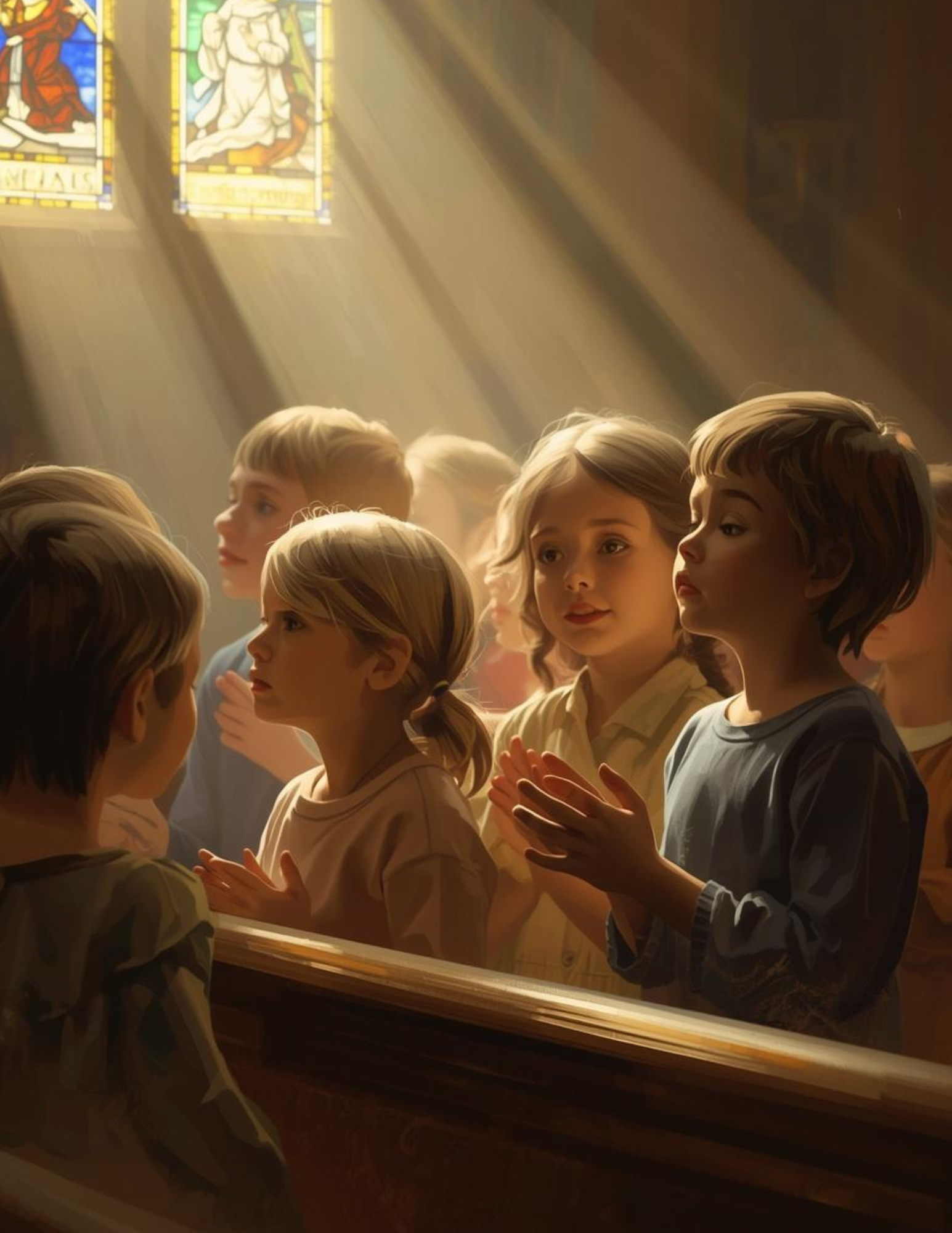
What Does Gratitude Mean for Christian Children?
Gratitude for Christian children goes beyond saying “thank you.” It is a spiritual discipline rooted in Scripture that teaches young hearts to recognise God’s goodness in every season of life. The Bible instructs believers in 1 Thessalonians 5:18 to give thanks in all circumstances, describing this practice as God’s will.
When children learn to give thanks daily, they develop a habit that shapes how they see God, how they respond to difficulty, and how they grow in faith. Gratitude is not a feeling that depends on good days. It is a choice that anchors the heart, even when life is hard.

Why Is Teaching Gratitude to Children Important?
Teaching gratitude to children matters because it forms the foundation of a faith-filled life. Children who practise thankfulness consistently are more likely to develop emotional resilience, a stronger prayer life, and a deeper awareness of God’s presence.
Research in child development supports this. Studies from the Greater Good Science Center at UC Berkeley show that children who regularly reflect on what they are grateful for report higher levels of optimism, better sleep, and stronger relationships. For Christian families, this takes on a spiritual dimension: gratitude teaches children that God has been faithful before, and He will be faithful again.
How Gratitude Shapes a Child’s View of God
A child who practises daily gratitude begins to see God differently. Instead of a distant figure they hear about on Sundays, God becomes the One who provided sunshine today, a kind friend at school, a warm meal, or a parent’s comforting hug.
This shift is significant. When children associate God with daily goodness, their trust in Him deepens naturally. Prayer becomes a conversation rather than a ritual. Worship becomes personal rather than performative. Faith moves from something they are told about to something they experience in the rhythm of everyday life.
Gratitude as a Spiritual Discipline for Children
Many Christian parents focus on teaching prayer and Bible reading, which are vital. However, gratitude is often overlooked as a spiritual discipline despite its prominence in Scripture.
The Psalms are filled with expressions of thanksgiving. Psalm 107:1 says, “Give thanks to the Lord, for He is good; His love endures forever.” Psalm 78:4 calls believers to tell the next generation about the praiseworthy deeds of the Lord. Gratitude is one of the simplest and most powerful ways to pass faith to the next generation.
When a family sits together at the end of the day and names three things God did for them, something beautiful happens. Children learn that God is active, that He cares about small things, and that faith is a daily conversation with a loving Father.

How Gratitude Builds Emotional Resilience in Children
Children face anxiety, comparison, and disappointment at younger and younger ages. Gratitude acts as a counter-force. It trains the mind to look for what is good rather than fixating on what is missing.
For Christian children, this resilience is rooted in a theological truth: God is sovereign, and He works all things together for good. A child who has spent months writing down daily blessings has a tangible record of God’s faithfulness. When hard days come, that journal becomes a reminder that God has never stopped providing.
This is not wishful thinking. It is the discipline of remembrance that Scripture models throughout the Old and New Testaments. The Israelites built altars of remembrance. Christian families can build journals of gratitude.
5 Practical Ways to Teach Your Child Gratitude
Here are five simple, actionable ways Christian parents can nurture grateful hearts in their children:
1. Name it daily. At dinner or bedtime, ask your child one simple question: “What is one thing you are thankful to God for today?” Let them answer freely. There are no wrong answers. Consistency matters more than perfection.
2. Write it down. There is power in putting gratitude on paper. A dedicated gratitude journal gives children a place to capture what God is doing in their lives. Over weeks and months, they build a written record of His faithfulness.
3. Pray it together. Turn thankfulness into prayer. Simple prayers like “God, thank You for my teacher today” or “Thank You for the rain that helps the flowers grow” teach children that God cares about every detail of their lives.
4. Read Scripture about thankfulness. Verses like Psalm 136:1, James 1:17, and Colossians 3:15 are powerful starting points. Read them together and discuss what they mean in your child’s everyday life.
5. Model it yourself. Children learn more from what they see than what they hear. When your child hears you giving thanks on a difficult day, they learn that gratitude is not about having a perfect life. It is about trusting a perfect God.

What Age Should Children Start Practising Gratitude?
Children can begin practising gratitude as early as age three. At this stage, gratitude looks like simple activities guided by a parent: tracing a thankful sentence, drawing something they love, or repeating a short prayer of thanks.
Between ages three and seven, children benefit from hands-on, parent-led gratitude activities that include colouring, tracing, and guided discussion. From ages eight to thirteen, children are ready for independent reflection, journaling, and deeper engagement with Scripture.
The key is starting early and making gratitude a daily rhythm rather than an occasional exercise. Like any spiritual discipline, consistency builds the habit that carries children through every season of life.
How a Gratitude Journal Helps Christian Families
A gratitude journal designed for children provides structure and consistency that make daily thankfulness practical. Rather than relying on memory or conversation alone, a journal gives children a physical space to write, draw, and reflect on God’s goodness.
The best children’s gratitude journals include daily Bible verses to anchor each entry in Scripture, age-appropriate prompts that guide reflection without overwhelming the child, a prayer component that turns gratitude into worship, and activities that engage different learning styles such as writing, drawing, and colouring.
Over 365 days, a gratitude journal becomes more than a book. It becomes a record of a child’s spiritual journey, a tangible reminder of every blessing God provided throughout an entire year.
Eucharisteo: A Gratitude Journal Built for This Purpose
This is exactly why Eucharisteo: A Gratitude Journal for Children was created. The name comes from the Greek word meaning “to give thanks,” and every page is designed to help children build a daily habit of recognising God’s goodness.
The journal is available in two age-specific editions. The edition for ages 3 to 7 includes 365 days of traceable sentences, simple prayers, Bible verses, and colouring activities designed for parent and child to complete together. The edition for ages 8 to 13 includes 365 days of independent reflection prompts, practical action challenges, daily prayers, and Scripture engagement designed for growing minds.
Each day features a unique theme rooted in Scripture, covering topics from friendship and forgiveness to God’s creation and courage. Together, the two journals contain 730 days of Bible-based gratitude content, enough to guide a child through an entire year of spiritual growth.
Explore the Eucharisteo Gratitude Journals

Frequently Asked Questions
Why is gratitude important in Christianity? Gratitude is important in Christianity because Scripture presents it as a command, a spiritual discipline, and a pathway to joy. The Bible contains over 100 references to giving thanks, and passages like 1 Thessalonians 5:18 describe thankfulness as God’s will for believers.
At what age can children start a gratitude journal? Children can start guided gratitude activities as early as age three with parent support. By age eight, most children are ready for independent journaling with reflection prompts and Scripture engagement.
How does gratitude affect children’s mental health? Research shows that children who practise gratitude regularly experience greater optimism, improved sleep quality, stronger social connections, and reduced anxiety. For Christian families, gratitude also strengthens the child’s sense of God’s presence and faithfulness.
What is the best gratitude journal for Christian children? The best gratitude journal for Christian children combines daily Bible verses, age-appropriate prompts, prayer components, and engaging activities. Eucharisteo by God Colours My Life offers 365-day journals specifically designed for ages 3 to 7 and ages 8 to 13.
How do I make gratitude a daily habit for my child? Choose a consistent time each day, such as bedtime or after dinner. Use a structured gratitude journal to provide daily guidance. Keep it joyful and pressure-free. Celebrate your child’s effort, and model thankfulness yourself.